Gardener of the seagrass meadows
Green turtle (verde) · Black turtle (negra)
Scientific name: Chelonia mydas
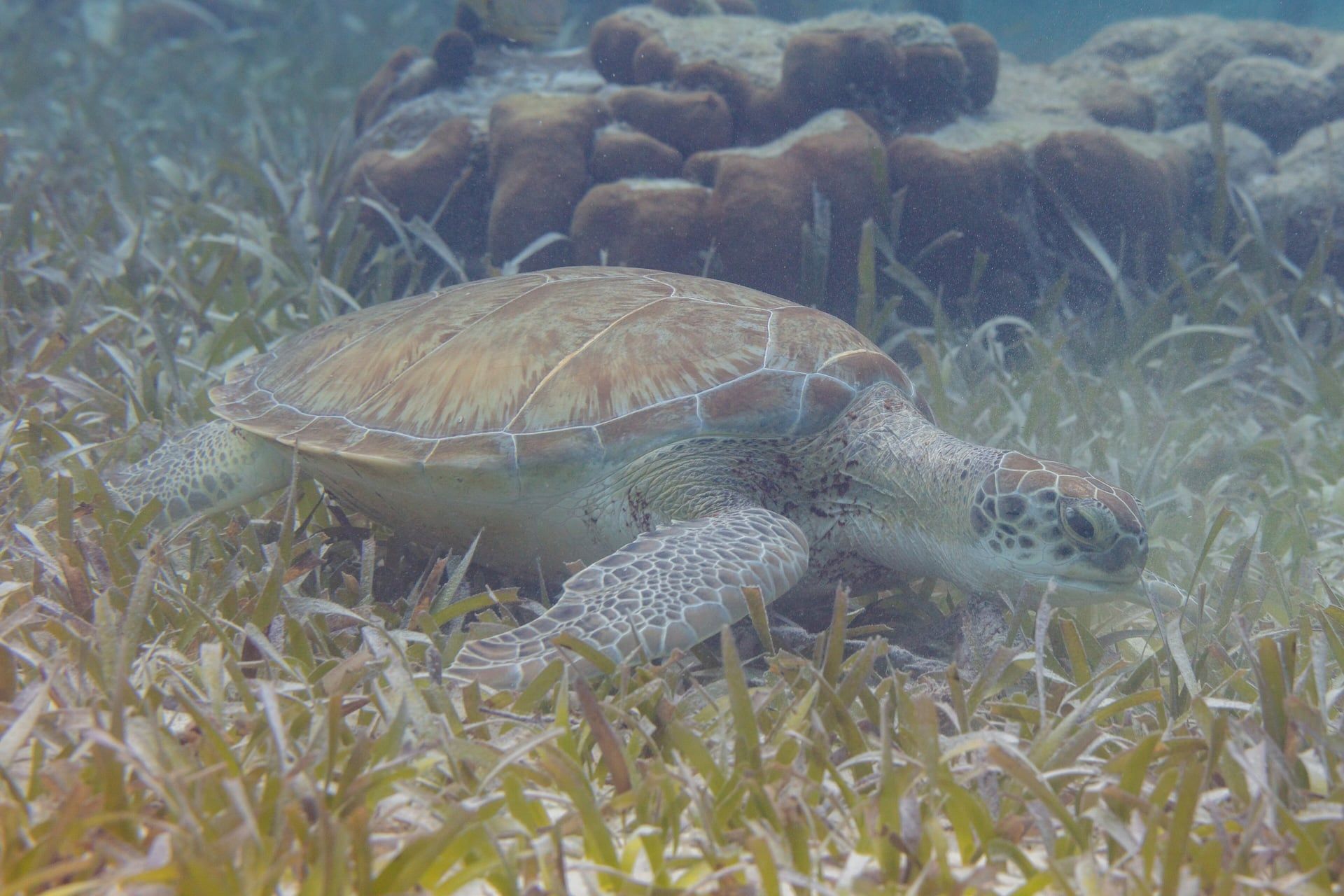
In the Caribbean they call it green, and in the Pacific, black. It is the same turtle, and on both coasts it does the same job: grazing the seagrass meadows and keeping them alive.
It is also the one that suffers most for its meat. That’s why we keep saying it, lovingly and tirelessly: we prefer them alive.
10 facts
The green turtle and the black turtle are the same species: in the Pacific we call it negra, black.
It is endangered (EN).
It is the largest hard-shelled turtle in the world.
As an adult it is a herbivore: it grazes in seagrass meadows.
By trimming the seagrass it keeps the meadows healthy, like a gardener of the seafloor.
Its name doesn't come from the color of its shell, but from the green color of its fat.
It is the turtle most hunted for its meat in Colombia.
In La Guajira, the Sawairu protected area (2019) means "green turtle" in Wayuunaiki.
The Seaflower Biosphere Reserve is the most important nesting area in the Colombian Caribbean for it, the hawksbill and the loggerhead.
In 2024, green turtles were among the 172 that made their way back home in San Bernardo.
Where it lives in Colombia
In the Caribbean and the Pacific, where it is called black. It feeds in the San Bernardo Archipelago and nests on the Seaflower cays.
You'll find it in
What it teaches us
That caring for small things sustains the big ones: without healthy seagrass meadows there are no fish, no fishing and no coastal communities.
How you can help
- Don't eat turtle meat or eggs. We prefer them alive and at home: THE SEA.
- Use less plastic: in the water, a bag can look like food.
- Ask where and how your fish was caught.
- During Holy Week and holidays, be a turtle-friendly tourist.
How you can help
Don't eat turtle meat or eggs. We prefer them alive and at home: THE SEA.