The little one of the Pazcífico
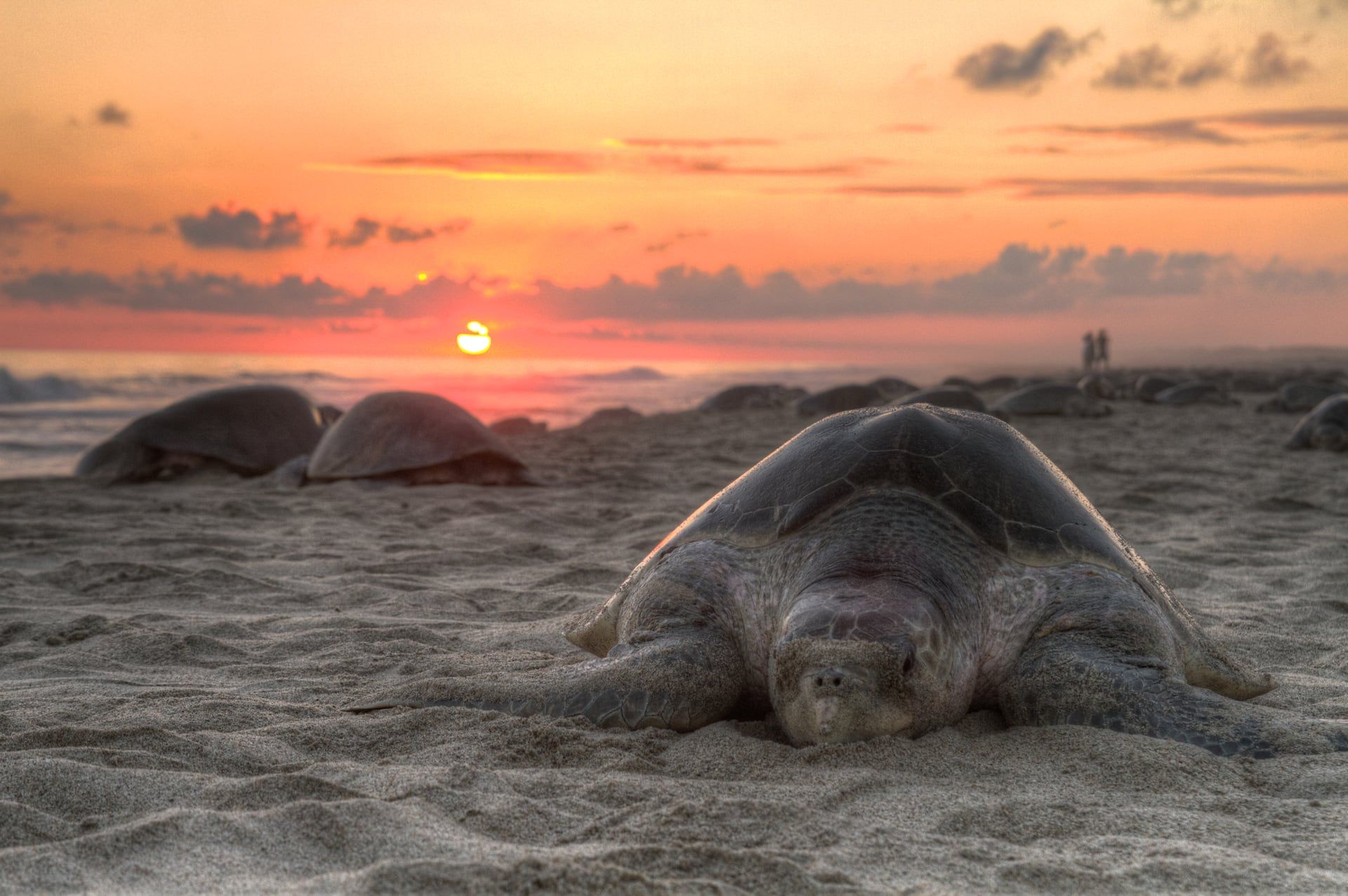
Olive ridley (golfina)
Scientific name: Lepidochelys olivacea
The olive ridley is small, but its journey is enormous. Every season it comes to the beaches of the Chocó Pacific to lay its eggs, and the communities that wait for it have become its guardians.
Its greatest threat isn’t on the beach but in the water: fishing nets. That’s why we keep asking the same question: do you know where and how your fish was caught?
10 facts
In Colombia it lives only in the Pacific.
It is the smallest sea turtle in Colombia.
It is vulnerable (VU).
El Valle, in Bahía Solano, is its most important nesting beach in South America.
Bycatch causes most of its deaths every year.
Communities in Chocó are building sustainable turtle-watching tourism around it.
In December 2024, after their first intensive community workshop, the Mecana community messaged us: 142 olive ridley hatchlings had reached the sea.
In Termales, Nuquí, 50 children became turtle guardians.
We work with it in Bahía Solano, El Valle, Juná, Mecana and Nuquí, always hand in hand with the communities.
It is an ancient being: sea turtles survived the dinosaurs, and there is still time for them to outlive us too.
Where it lives in Colombia
Only in the Pacific: it nests at El Valle (Bahía Solano), Juná, Mecana and the beaches of Nuquí.
You'll find it in
What it teaches us
That what we eat also reaches the sea. A choice at a dinner table in Medellín or Bogotá can save an olive ridley in Chocó.
How you can help
- Do you know where and how your fish was caught? Always ask.
- If you travel to the Pacific, choose responsible tourism that leaves value in the community.
- Before joining a release, ask whether they follow standardized protocols and keep groups small.
- Don't eat turtle meat or eggs.
How you can help
Do you know where and how your fish was caught? Always ask.