The turtle on the thousand-peso coin
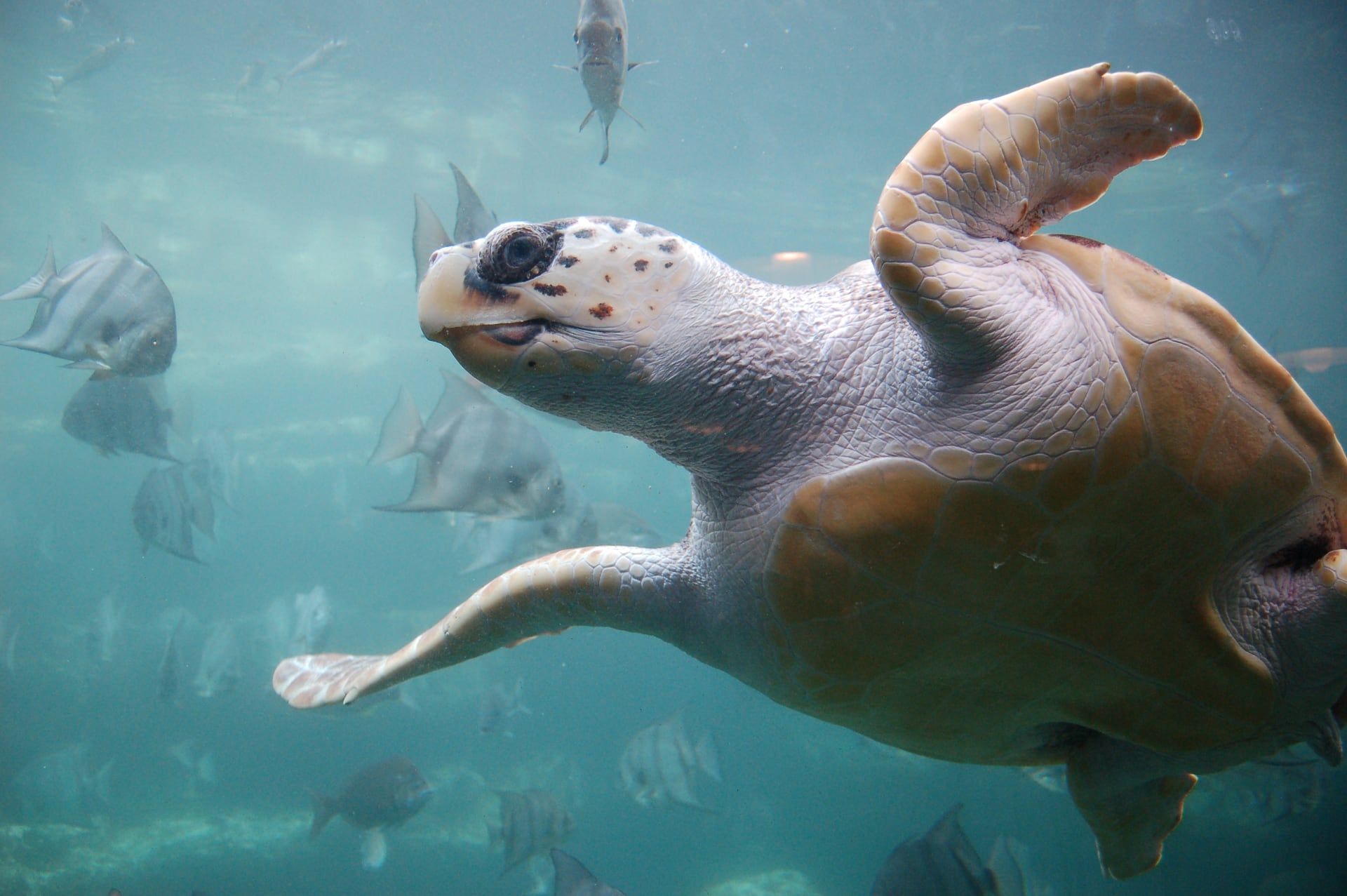
Loggerhead (cabezona) · Caguama
Scientific name: Caretta caretta
Have you ever seen one in Colombia? If not, you’re not alone: the loggerhead is one of the most threatened turtles in the country. Most of us know it better from the thousand-peso coin than from seeing it swim.
That’s why every loggerhead that fishers hand over alive, that we measure, tag and return to the sea, is news we celebrate with the whole Turtle Family.
10 facts
It is called cabezona, "big head", for its large head.
In Colombia it lives only in the Caribbean.
It is critically endangered (CR) in Colombia and vulnerable (VU) globally.
It no longer nests on the mainland Caribbean coast of Colombia.
It is the turtle on the $1,000 peso coin. We cannot let it remain only on the coin.
A juvenile loggerhead swam from Cayo Largo, Cuba, to San Bernardo in 59 days.
The Seaflower Biosphere Reserve is its most important nesting site in Colombia.
Seeing an adult loggerhead in Colombia is a MIRACLE.
In Isla Fuerte, thanks to the fishers, an adult female of about 100 kg made her way back home.
Like all sea turtles, it is an ancient being: its ancestors were swimming when dinosaurs still walked the Earth.
Where it lives in Colombia
Only in the Caribbean: it feeds and travels through the San Bernardo Archipelago and Isla Fuerte, and nests on the cays of the Seaflower Biosphere Reserve.
You'll find it in
What it teaches us
That the sea has no borders: a turtle born in Cuba can grow up in Colombia. Caring for it is shared work between countries, communities and people who will never meet.
How you can help
- Don't eat turtle meat or eggs, and don't buy products made from turtles.
- Ask where and how your fish was caught.
- If you see one in the water, watch from a distance, without touching or chasing it.
- Support the programs of our fisher allies in San Bernardo and Isla Fuerte.
How you can help
Don't eat turtle meat or eggs, and don't buy products made from turtles.